 |
||||||||
| Information also in  German
and German
and English where English whereavailable |
||||||||
|
||||||||
 |
||||||||







 |
||||||
|




|
| Programa general | Teatro Degollado | Friday the 30th and Sunday June the 1st Teatro Degollado Premiere in Jalisco Producing the Festival Cultural de Mayo
LUDWIG VAN BEETHOVEN, Composer
Beethoven first appeared in public in Vienna on the 29th March, 1975, playing one of his piano concertos. From 1796 to 1800, he played his own work in concerts and competitions in Prague, Dresden, Leipzig, Berlin and Vienna. In his ‘Heilingenstadt Testament’, written between October the 6th and 10th, 1802, he communicates his worries on his progressive deafening. He creates his Third Symphony and the Eroica between 1803 and 1804. Emmanuel Schikaneder asked him for ‘Vestas Feuer’ (La Flama Vestal) in 1803, which he started but never finished. He started working on ‘Fidelio’, presented in 1805. From 1802 to 1814 he wrote many concerts, camera works and piano solos. His ‘Ninth Symphony’ was born in 1824 and, from that year to 1826, he composed his quartets for strings Opus 127, 130, 131, 132, 133 and 135. ‘Fidelio, oder Die ebeliche Liebe’, was presented in Vienna in the Theater an de Wien on the 20 November 1805 sang by Sonnleithner, but this work was revised by him on March 1806, Vienna on May 1814, and it became part of the different overtures now known as ‘Leonore or L’Amour Conyugale’. When considering the different music styles prevailing at Beethoven’s time and his vast and outstanding works –five complete piano concertos, nine symphonies, sixteen string quartets and thirty two piano sonatas— one is disconcerted by his only complete opera. Why only one of three versions with no less than four different overtures? Many critics have suggested the had no empathy for that art style, but perhaps a more adequate answer would be found in the adherence Beethoven showed all through his life towards the principles of The Illumination, a philosophy that among other ideas, taught that humans may conquer the antagonism that separates humans, that any obstacle may be overcome through reason, that nature can provide us with an inexhaustible source of merriment and wisdom and, like Immanuel Kant, one of his favorite philosophers, he proclaimed in 1784 that happiness can be attained by those daring to be cautious and sensible. Beethoven’s faith in The Illumination dogmas is reflected, on one side, in his attraction for philosophically idealistic literary works, and on the other, in the texts he adapted to music. On this respect, one remarkable case would be his thirty-year fascination with the poem ‘An die Freude’ – ‘To joy’, (A la Alegría)- by Friedrich Schiller. This preference, however, appears as documented in 1793 when B. L. Fischenich, the Bonn lawyer, wrote to the poet’s wife letting her know that the 23 year-old composer, devoted to what was great and sublime, wanted to write the music for his poem. This ambition fructified until he wrote the choral for his Ninth Symphony (1824). From that point of view, Fidelio is but a chapter with an enormous creative promise in which Beethoven’s devotion to poetry moved him to make his greatest effort, as Christine Gerhardi wrote in 1797, “towards the inaccessible goal that art and nature have pointed to us.” A brief review of some operatic librettos rejected by Beethoven supports what has been said. Heinrich Collins proposal in 1809 to convert Bradamante into an opera was rejected because the composer found it had “a soporific effect on senses and reason”. ‘Vestas Feuer’ (La Flama Vestal) by Emmanuel Schikaneder, was discarded after the composer finished the first scene because he found that “language and verses were of such a sort that they could only be spoken by the most vulgar Viennese women.” Plans for an opera based on Goethe’s ‘Faust’, first performed in 1808, were cancelled in 1812 when Beethoven met Goethe, arriving to the conclusion that the revered poet immensely enjoyed courtesan tricks or craftiness “much more than what a poet is entitled to.” “Cry”, grumbled Beethoven to Beitkopf and Härtel, his publishers, telling them that they cared more to uplift Goethe than for his “really being the main teacher of a nation.” On his side, Goethe found the composer as an “absolutely uncontrollable man.” Needless to say that for an idealist, no opera is satisfactory, especially if ethical values are preferred over the development of character or musical interest, as was the case. Besides, there is always a risk of philosophy coming out triumphant or, even worse, that it seems insincere and false. The American critic and composer Virgil Thomson always thought of Beethoven that way, attacking his memory in his essay ‘Mozart’s leftist tendencies’ in which he commented about Beethoven as having been ‘a fraud, a deceit, since he relished talking about human rights and dignity when what he really was corresponded to an intolerant, irascible and intriguing career professional.’ Chopin, who had been the romantic composer less influenced by Beethoven, had considered him as ‘having embraced the Universe with the power of his Spirit’, since he knew in depth his inexhaustible musical richness. In Fidelio, Beethoven achieves great success when expressing musically the philosophical implications appearing in the plot, ability recognized by Chopin, and despised by Thompson. Joseph Kerman persuasively pointed that from the Third Symphony, The Eroica –composed two years before Fidelio’s first version, Beethoven’s work becomes individualistic which evokes a quasi-human reaction from the listener for its intimacy, concern and individuality. Fidelio’s main characters may occasionally impress us for the emotions they produce, their incumbency, but are nevertheless manifested in a universally persuasive manner which clearly expresses the composer’s interest on humanity as a whole. In 1814, Beethoven declared that ‘opera is successful when speaking and generating benevolent souls, merciful hearts to all that is big and beautiful’, and the listener feels inclined to agree. Beethoven not only succeeds in expressing that, but also creates an operatic masterpiece in Fidelio, far from showing any lack of sympathy for the opera. There is no doubt that the composer is absolutely first rank when hearing the glorious quartet ‘O welche Wunderwar’, or ‘Abschleulicher! Wo eilst duh in?’ in Leonore; the prisoner’s choir ‘O welche…’ and the gradual intensity in Florestan’s recitative or the aria ‘Gott! Welch ein Dunkel hier!’ and what about the rapture in the duet ‘O namelose Freude’, sung by Eleonore and Florestan celebrating their reunion? A great composer indeed! Jalisco Philarmonic Orchestra In 1915, under the initiative of Maestro José Rolón, a group of musicians from Jalisco started offering symphonic and camera concert music to Guadalajara audiences, thus establishing the starting point for what in the future would be the Guadalajara Symphonic Orchestra (Orquesta Sinfónica de Guadalajara). The orchestra was managed by the Concert Society (Sociedad de Conciertos) between 1915-1924, which had a director’s board, was sponsored by private institutions and received the State Government subsidy, interrupted in 1923 and this caused the disappearance of the organisation. Nevertheless, the musicians continued working to prevent the Orchestra from being completely obliterated, and obtained economical support from Governor José Guadalupe Zuno. It must be mentioned that Don Pedro González Peña was completely devoted to the Orchestra up to 1939.
In February 1942, while Guadalajara was celebrating its 4th Centennial, Maestro Leslie Hodge was on holiday there, and when he heard classical music played by some musicians, he approached them, willing to get acquainted encouraging them to constitute a formal orchestra. He was invited to organize it and conduct it, but at that moment he already had other commitments, promising to return after the end of World War II, and in view of this offering, the Friends of Music Association (Asociación de Amigos de la Música) requested from the Governor, Marcelino García Barragán to guarantee the survival of the orchestra until Mr. Hodge returned, and thus he became the first conductor of the Guadalajara Symphonic Orchestra. This sponsorship was sustained until 1950, year on which an association was constituted, Conciertos Guadalajara, A.C. (Guadalajara Concerts, A.C.), which sponsored the Guadalajara Symphonic Orchestra with state, municipal and private institutions funding. The Guadalajara Symphonic Orchestra became part of the Arts Department in the State of Jalisco in 19971, which since then, has taken care of its artistic level and economic concerns. Directors working with the orchestra have recognized it as adaptable and versatile, averaging 60 yearly appearances among concerts, opera and ballet. It has been conducted by famous musicians, such as Leslie Hodge, Abel Eisenberg, Helmut Goldman, Eduardo Mata, Kenneth Klein, Hugo Jan Huss, Francisco Orozco, Manuel de Elías, José Guadalupe Flores, Guillermo Salvador and Luis Herrera de la Fuente. Some of the soloists have been Paul Badura-Skoda, Claudio Arrau, Jörg Demus, Henryk Szering, Plácido Domingo; Alfred Brendel, Bernard Flavigny, Jean Pierre Rampal, and Narciso Yepez, among others.
The Guadalajara Symphonic Orchestra changed its name in 1988, giving birth to the Jalisco Philharmonic (Filarmónica de Jalisco). It was intended that the whole State of Jalisco would receive its benefits. Every member of the orchestra has been selected for the quality of auditions given by aspiring interpreters, selecting its members among the very best to guarantee uniformity in sound and technical perfection of performance each of them should have. This allows us to consider that the Jalisco Philharmonic can gallantly measure up to all kinds of repertoire, including the most ambitious modern compositions. Héctor Guzmán has been the new conductor in charge of the Jalisco Philharmonic since May 2004. JOHANNES WILDNER, conductor (Austria)
After positions as chief conductor of the State Philharmonic Orchestra of Košice (Slovakia, 1990-93) of the Prague State Opera (1994-95), and as First Permanent Conductor of the Leipzig Opera (1996-98), Johannes Wildner, former violinist of the Vienna Philharmonic Orchestra and musicologist, was "Generalmusikdirektor“ of the New Philharmonic Orchestra of Westphalia from 1997-2007, an orchestra based in Recklinghausen (Germany) which also is the opera orchestra of the opera house in Gelsenkirchen. As a guest conductor Johannes Wildner has conducted major orchestras all over the world such as the Royal Philharmonic Orchestra London, the St. Petersburg Philharmonic, the Russian State Symphony Orchestra, the orchestra of the Arena di Verona, the Tokyo Philharmonic Orchestra, the Danish National Symphony Orchestra Copenhagen, the Odense Symphony, the BBC-Orchestra London, the National Symphony Orchestra of Ireland, the Zagreb Philharmonic Orchestra, the New Zealand Symphony Orchestra, the National Symphony Orchestra of Taiwan or the China Philharmonic or the recently founded Symphony Orchestra of India in Mumbai. Johannes Wildner has recorded more than 60 CDs and videos and DVDs, including the integral version of “The Bat” and “Così fan tutte”, "Carmen", Bruckner’s 3rd (in all versions) and 9th symphony (with the reconstructed finale by Samale, Philips, Mazzuca and Cohrs) and a Super Audio CD (Audite) with organ works by Barber, Saint-Saëns, Zabel and R. Strauss, played by Christian Schmitt (organ) and the RSO Saarbruecken. In 2007 cpo released his recording of music by Erich Zeisl played by the RSO Vienna. This successful cooperation was continued also in 2007 with a recording of symphonic pieces of Josef Marx with the RSO Vienna and the cpo label. Johannes Wildner has always devoted an important part of his activity to opera. Great successes of recent years have been Peter Maxwell Davies' "The Martyr of St. Magnus" in the Austrian Festival "Carinthian Summer", Verdi's "Il Trovatore" at the Opera house of Gelsenkirchen (Germany), Bizet's "Carmen" in the Arena di Verona, Johann Strauss' "The Bat" at the New National Theatre Tokyo, Mozart's "Don Giovanni" at the Croatian National Theatre Zagreb and Puccini's "Tosca" at the Czech State Theatre of Brno. In 2007/2008, Johannes Wildner will also assume a series of opera new productions, such as at the Landestheater Salzburg, the opera houses of Zagreb and Brno, the Carinthian Summer, as well as the first opera production of the Symphony Orchestra of India in Mumbai in February 2008 (Madama Butterfly).
He won a prize as choreographer of the Aviv Jewish Dance Festival in 1990 and 1991, receiving also the Carlos Halpert award as the most distinguished presentation of the festival. From 2000-2004 he was the General Director of the Festival. His authorship includes more than a dozen choreographies and presentations and among the most relevant are the one for the 50th CDI Anniversary, the homage to the renowned painter Eduardo Cohen; the dance and choreography for the staging of El Cimarrón, conducted by Sergio Vela. Since 1992 he has been a permanent guest choreographer to the Ballet Teatro del Espacio, (recently disappeared upon the death of Michel Descombey), where his works were represented, as well as at the Palacio de Bellas Artes and the Centro Nacional de las Artes. The most recent was ‘Mal Digo Cuerpo’ at Palacio de Bellas Artes, inspired by one of his poems and also included in his book, published by Praxis Editors. In 1999 he received Diplomas in Theater, Philosophy and Literary Creation. His recent approach to writing moved him to integrate poetry with his stage career, thus opening new horizons to his creative endeavors. His choreography Dermis, with the National Dance Company (Compañía Nacional de Danza), opened in October 2002 at the Teatro de la Danza, to be programmed later at Palacio de Bellas Artes in November, same year, with Álvaro Carcaño as guest actor. In August 2004, he presents his second work with the Compñía Nacional de Danza, ‘La Noche Ladra’ (Night Barks) at the Palacio de Bellas Artes; soloists were Laura Morelos and Raúl Fernández. Since his first love in life is dancing, his scenic curiosity daily compels him to offer performances in which he integrates theatre, dance, poetry and live music. In October 2004, he presented ‘El Nido del Hombre’ (Man’s Nest), project chosen by CONACULTA-CENART (Consejo Nacional para la Cultura y las Artes-Centro Nacional de las Artes) in its 2004 competition. His company, ‘Scenic Flight’ (Vuelo Escénico) opened with a 20 show performance at the Centro Nacional de las Artes (National Arts Center). He acted as Scene director and stage designer for Ildegonda, an opera by Melesio Morales, offered at the 2007 May Cultural Festival (Festival Cultural de Mayo.) FLORESTAN: MICHAEL BABA, tenor (Alemania) In 1992 he became a member of the Municipal Münster Theatre, interpreting roles like the Painter and the Black in ‘Lulu’ and in ‘Salome’, Narraboth, conducted by Will Humburg, as well as the Baron Kronthal in ‘Der Wildschütz’, under Lothar Koenigs. The Munich National Theatre am Gärtnerplatz invited him to sing in 1998 for the Biennial, singing Tarnopolsky’s opera ‘If Time overflows’, with Peer Boysen as conductor. He became a member of the company at the Am Gärtnerplatz Theatre, where he sang The Duke in ‘A Night in Venice’. Simon in ‘Bettelstudent’; Hoffmann in ‘The Tales of Hoffmann’; Tom Rakewell, in ‘Rake’s Progress’; he represented The Governor, Vanderdendur and Ragotsci in a non scenic representation of ‘Candide’; he also was Lucio in Wagner’s ‘Liebesverbot’, when Claus Guth was the stage director. He was invited to sing in Dessau, where he appeared in Johannes Felsenstein’s productions, such as Max in ‘Freischütz’ y Erik in ‘The Ghost Ship’. He traveled to Japan with this last opera and also sang the same role in the Chemnitz in a tour with the Dessau Theatre. In a United States tour, he was invited to sing Max in ‘Freischütz’. The first time he sang, he did it at the Tyrolese Festival at Erl in 2006, interpreting Parsifal, and it fructified in a tight collaboration with maestro Gustav Kuhn. He signed a contract for the Würzburg Theatre, where he represented Pfitzner’s ‘The Heart’. Michael Baba was invited to sing for the Vienna Volksoper in that same year, presenting Max in ‘Freischütz’ and Matthias Freudhofer in ‘Evangel Mann’. After that, he made an appearance, among others, as Pedro in Albert’s ‘Tiefland’. In 2007, the singer made his debut as Siegmund in Wagner’s ‘The Walkyrie’, at the Erl Festival, conducted by Gustav Kuhn. Up to this moment, Michael Baba has worked with orchestra conductors: Peter Schneider, Gustav Kuhn, David Stahl, Christof Prick, Marc Piolett and stage directors August Everding, Claus Guth, Georg Quander, Michael Quast, Marco María Marelli As a concert singer, this tenor has acquired an excellent position by offering, among others, the Ninth Symphony and Beethoven’s oratorio ‘Christ in the Mount of Olives’, Haydn’s ‘The Seasons’, Honegger’s ‘King David’; ‘Das Lied von der Erde’ written by Mahler and Mozart’s ‘Requiem’ for Berlin’s Philharmonic. Recitals were also presented in Charlotte (United States). He made his debut with Haydn’s Orchestra in 2007, singing ‘Das Lied von der Erde’ and ‘Misa Solemnis’, conducted by maestro Gustav Kuhn. LEONORA: GABRIELE MARIA RONGE, soprano (Alemania)
Is securely established as "one of the greatest Wagnerian sopranos of our time" (New Straits Times, 2000). Recently she sang at the Vienna State Opera (“Fidelio” and “Walküre”-Sieglinde with Plácido Domingo) and the Berlin State Opera (“Fidelio” and Brünnhilde). In 2002 she made her debut at the Grand Théâtre de Genève in the role of Brünnhilde in “Götterdämmerung” conducted by Armin Jordan, she sang “Fidelio” in Tokyo and Senta in a Werner Herzog production of “Flying Dutchman”. In 2002/03 she made her debuts in Bilbao and Montpellier, she sang her first Chrysothemis in “Elektra” at the Opéra de Marseille and made her debut in Catania with “Götterdämmerung”. During the season 2003/04 she sang her first “Wozzeck” with the Accademia di Santa Cecilia Rome conducted by Daniele Gatti, her first Turandot in Lucca, Pisa, Ravenna and later in Catania,, “Fidelio” in Genoa (conducted by Lorin Maazel). The season 2004/05 took her to the Liège for "Götterdämmerung", to the New Israeli Opera for "Fidelio" and to Toulon for "Ariadne auf Naxos". She opened the season 2005/06 with the complete "Ring" at the Opéra Royal de Wallonie, recorded by the Belgian television. In 2007 she sings "Fliegender Holländer" in Trieste and makes the Isolde debut at the Teatro Regio di Torino. In 2008 she will return to the Teatro alla Scala di Milano as Marie in "Wozzeck". Gabriele Maria Ronge was born in Hannover, Germany; the child of a French father and a German mother. She finished her studies in Romance and Anglistic languages before studying voice with Nurit Gorén and Friedel Becker-Brill. After her first engagements in Osnabrück and Gelsenkirchen she was offered a contract by Wolfgang Sawallisch at the Bavarian State Opera in Munich where she sang many roles including Agathe, Eva and Jaroslawna. At this time she began a freelance career with engagements at the Berlin State Opera (Rosenkavalier, Freischütz), Berlin Deutsche Oper, Hamburg State Opera, in Cologne, Bonn, Frankfurt, Essen, Hannover, Wiesbaden and Karlsruhe. Her international career started at the Grand Opéra de Paris singing Eva in “Meistersinger“. She made her Italy-debut as Isabella in “Liebesverbot” at Teatro Massimo di Palermo and sang Gutrune in Bologna under the baton of Riccardo Chailly. In 1994, she made her debuts at Teatro alla Scala Milano under Riccardo Muti and at the Vienna State Opera and sang Sieglinde for a CD-production for Karlsruhe State Opera. The following year she sang for the first time at Zürich Opera (Senta under Rafael Frühbeck de Burgos) and recorded the immolation scene from “Götterdämmerung” for the new BMG-label Arte Nova. At the Bregenz Festival and in Athens Concerthall she sang Leonore in “Fidelio”. In 1996 she sang Senta and Gutrune at Vienna State Opera (Donald C. Runnicles, Peter Schneider, Leopold Hager), Strauss “4 last songs” with the SWF Symphony Orchestra and with the Orquesta Nacionales de Espana, conducted by Christian Badea, „Merry Widow“ in Frankfurt under Sylvain Cambreling, Wagner-Concerts with Paul Frey, “Les nuits d´été” with the Orchestra of the Rome Opera. In 1997 she started with “Flying Dutchman” in Taipeh, followed by Mahler´s 2nd symphony and “Götterdämmerung” at Hamburg State Opera. She made her debut as “Salome” at Opéra Royal de Wallonie, together with Paata Burchuladze she sang excerpts from “Tosca” and “Forza del Destino”. In Berlin she sang the immolation scene from “Götterdämmerung” conducted by Michael Gielen and with the SWF Symphony Orchestra she made a recording of Beethoven´s “Ah, perfido!”. She had successful performances of “Fidelio” at the Staatsoper Berlin. In 1998 she returned to Berlin Staatsoper in the title role of “Salome” conducted by Horst Stein and Peter Schneider, then to Liège for “Tannhäuser” and to Essen for “Fidelio”. In gala-performances of “Salome” she made her debut at the Budapest Spring Festival. She returned to Karlsruhe for “Flying Dutchman” and “Walküre”, with Eliahu Inbal she sang Gutrune in Torino, together with the RSO Berlin she sang the demanding role of Chawa in the world premiere recording of Rudi Stephan´s opera “Die ersten Menschen” and with Marek Janowski she recorded Krenek´s “Der Diktator”. She returned to the Vienna State Opera as Senta. In 1999: "Fidelio" in Munich conducted by Zubin Mehta, Mahler´s “Das Klagende Lied” with Rafael Frühbeck de Burgos in Berlin, “Vier letzte Lieder” and final scene from “Salome” with Michel Plasson in Dresden, Mahler´s Symphony #8 with the Berlin Philharmonic conducted by Bernard Haitink, debut as Aida, "Flying Dutchman" at the Deutsche Oper Berlin and at the Frankfurt Opera. In 2000/2001 Gabriele Maria Ronge made her debuts as Brünnhilde in a new “Ring”-production of the Graz Opera, Wagner-concerts got her to Kuala Lumpur (with Kazushi Ono conducting) and Spain. With Leopold Hager she sang her first “Wesendonk-Lieder”. She was Senta in the opening of the 2000/2001 season at the Teatro Comunale di Bologna (Cond.: Daniele Gatti) as well as at the Frankfurt Opera and at the Deutsche Oper Berlin. Among her CDs we find a highly acclaimed recording of Sieglinde in "Walküre", the final scene from "Götterdämmerung", "Der Diktator" by Ernst Krenek, Mahler´s Symphony no.2. and the main female role in the world premiere recording of Rudi Stephan´s opera "Die ersten Menschen". ROCCO: KURT RYDL, bass (Austria)
He has released recordings under Carlos Kleiber, James Levine, Ricardo Muti, Lorin Maazel, Herbert Von Karajan, among others.
MARCELINA: MARIA KATZARAVA, soprano (México) Her debut was in ‘La serva padrona’, with the Chihuahua Symphonic Orchestra (Orquesta Sinfónica de Chihuahua) conducted by Carlos García, and with the Oaxaca’s Chamber Orchestra (Orquesta de Cámara de Oaxaca), conducted by Javier García Vigil. In the ‘Maritza Alemán’ competition, she won First Prize in 2004, and in the finals of the 2005 International Competition ‘Francisco Viñas’, she was granted a special award for an international operatic perfection course in Sienna, Italy, taught by tenor Carlo Bergonzi. On the XXV Carlo Morelli National Competition held in 2005, when she was twenty-one years old, she obtained the first place. Miss Katzarava is also part of the SIVAM Workshop (International Society of Mexican Values - Sociedad Internacional de Valores Mexicanos). The tenor Ramón Vargas and the baritone Jorge Lagunes, invited her to participate with them singing concert integrated by duets and arias, accompanied by the Mining Symphonic Orchestra (Orquesta Sinfónica de Minería), conducted by Maestro Enrique Barrios. She took part in Charles Gounod’s opera ‘Romeo et Juliet’ at the Palacio de Bellas Artes, with tenor Rolando Villazón, Anna Netrebko and Fernando De la Mora, conducted by Enrique Patrón de Rueda. She also interpreted the Mexican operas ‘Il Guarany’, by Carlos Gomes, and ‘Ildegonda’, by Melesio Morales, with tenor Leonardo Villeda, at the International Morelia Festival, conducted by Fernando Lozano. Her operatic repertoire has been perfected and increased under James Demster, and her vocal coach is Luisa Besrokava. She has been Mussetta, singing ‘La Bohème’ at the Palacio de Bellas Artes. At the International Tamaulipas Festival, she was Liu in ‘Turandot’, both under Enrique Patrón de Rueda. Her next commitments include an important concert with tenor Fernando de la Mora and soprano Olivia Gorra, a concert cycle in Spain and a concert tour in France by the end of this year, accompanied by pianist Lela Katsarava. DON FERNANDO: GUILLERMO RUIZ, baritone (México)
His professional activity has covered different lyrical styles and a great variety of composers, by performing opera, oratories, chamber music and contemporary works. His artistic endeavor is now mainly in the most important of Mexico’s theaters, such as Palacio de Bellas Artes, Sala Nezahualcóyotl, and others, where he has been very successful. He has appeared in Mexico and abroad directed by many international conductors, such as Alfredo Sillipigni, Francisco Savín, Daniel Lipton, Enrique Patrón de Rueda, Marco Balderi, Marco Parisotto, Guido María Guida, Luis Bacalov, to mention a few. His remarkable vocal extension has allowed him to perform roles for baritone and bass baritone in Donizetti, Rossini, Mozart, and Verdi operas. He was very successful as Diego Rivera in the production of the Festival Cultural de Mayo 2007, when the opera written by Roberto Rodríguez, FRIDA, had its world première, and in subsequent presentations. JOAQUINO: JOEL MONTERO, tenor (México)
In 2001 he won the special prize at the Montserrat Caballé competition in Andorra. The following year he was awarded the ‘Luiggi Infatino’ prize at the Traiann Graozavescu competition for tenors in Romania. In the same year as his success in Andorra, Joel Montero received offers from both the opera studio in Zurich and the state opera house in Meiningen, Germany. He chose the latter due to the more challenging roles on offer and has remained there since this time as a lyric tenor. Joel Montero is frequently in demand as a guest artist and has sung in Freiberg, Döbeln, Bad Elster, Eisenach, Bremen, Bad Hersfeld, Frankfurt, Plauen, Zwickau, Coburg, Dresden, Chemnitz and Schwerin. His engagements have also taken him abroad to countries such as Austria, Italy, Finland. CARLOS MONTEMAYOR, dramatic adaptation (México)
Among the national and international awards he has received, we have the Premio Internacional Juan Rulfo, for his story ‘Operativo en el trópico’; the Xavier Villaurrutia prize for ‘Las llaves de Urgell’; First Novel Prize for the Fiftieth Year Anniversary of El Nacional, for his ‘Las Minas del Retorno’; the José Fuentes Mares, for his poetry book ‘Abril y otras estaciones’. He also got the Alfonso X for literary translation, considering the whole of his work as translator, and in 1991, the Premio de Narrativa Colima, for his novel ‘Guerra en el Paraíso’, printed by Seix Barral. He once received a scholarship from the Centro Mexicano de Escritores (Mexican Writers Center), and is now a member of its Board of Consultants. ‘Chiapas, la rebelión indígena de México’ and ‘Los cuentos gnósticos de M. O. Mortenay’ are some of his most recent and commented writings. Montemayor is now a Voting Member of the Mexican Academy, and Correspondent of the Real Academia de la Lengua Española. He has been invited to become one of its Advisors. BERNHARD REHN, stage designer (Austria)
1996 1996-1997 1998-1999 2001-2002 2003 2005 2006 2007 2008 JOSE DE JESÚS HERNÁNDEZ RODRÍGUEZ, lightning
He also assisted Philippe Amand for designing the lighting and scenography for ‘Extras’, written by Sabina Berman; ‘Combate de Negro y de Perros’, by Bernard Marie Koltés and directed by David Psalmon; ‘Ahora y en la Hora’, by Victor Hugo Rascón Banda, directed by Luis de Tavira; ‘¿Dónde están las mariposas?’ by Director Marco Pétriz. He also participated in the operas ‘ Il campanello’ and ‘La Medium’ directed by Mauricio García Lozano and José Caballero, respectively, presented at the Centro Nacional de las Artes (CNA). Antonio Zúñiga wrote ‘Una Luna de Pinole’, also designed by Philippe Amand, and José de Jesús Hernández. This play participated at the Festival de Teatro de La Habana in September 2003 and in Morelia’s XXVI Muestra Nacional de Teatro en Morelia, Michoacán, (National Theatre Show in Morelia) the same year in November. They collaborate again in June 2003 for the Worldwide Scenography Quadrennial in Prague, Czech Republic. Jesús Hernández received a scholarship from the State Fund for Culture and Art, Instituto de Cultura de Yucatán.
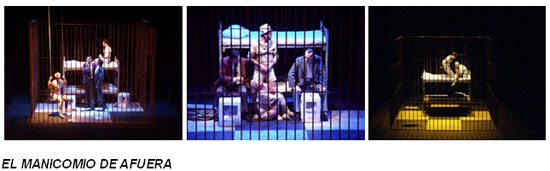
September 2005 saw his design of lighting and design for ‘Pancho Villa y los Niños de la Bola’, by Antonio Zúñiga, directed by Rodolfo Guerrero. He designed the staging for ‘La Excepción y la Regla’ in 2006, directed by David Psalmon. For Susana Cato’s ‘El Manicomio de Afuera’, he worked on staging and lighting, and the play was directed by Noé Lynn for the Clandestine Theatre. For Prague’s Quadriennial in August 2006, he was pre-selected as scenographer for his design for the theater play ‘Pancho Villa y los Niños de la Bola’. Jesús Hernández is now working, under the sponsorship of the ‘Programa de Fomento a Proyectos y Coinversiones Culturales del FONCA’ (Fondo Nacional para la Cultura y las Artes), (Cultural Projects and Joint-Investments Development Program), on the important project 3D Theaters in Mexico. GERARDO RÁBAGO, choir preparer(México)
‘It has been a pleasure to work with the Coro de México and its director Gerardo Rábago. His enthusiasm, discipline and vitality have motivated the orchestra and me enormously.’ In 1993 he received the Special Prize Marin Constantin, from the famous Rumanian Director and, in 994, the Prize from the Music and Theatre Critics Union for greatly improving music in Mexico. ‘ ‘The Coro Nacional de México, directed by Gerardo Rábago, is a real certainty with great perspective.’ Gerardo Rábago has performed in Mexico, Colombia, Venezuela, Russia, Greece, Argentina and South Korea. He has been recognized for his work as choir director in the Sixth Festival and Fourth International Athens Concourse, at the Choral Music Festival in Kifissiá and in the Second World Choral Olympics in Korea. He has conducted orchestras interpreting among other important pieces, Mozart’s Requiem Mass K626, J.S. Bach’s Magnificat, Beethoven’s Fifth Piano Concerto, W. A. Mozart’s Symphony Concertante in B flat, Domenico Zipoli’s Misa Brevis, and Handel’s Messiah. After having been Mexico’s counselor at the International Federation for Choral Music, in 2002 he was named as a member of the board of directors at this important international organization, and is frequently invited to give Master classes and to be a member of the board of examiners for national and international events. He acted as National Choirs Coordinator of the National System for Music Promotion, (Sistema Nacional para la Promoción de la Música) dependent on the CNCA, where he gave impulse to the growth and integration of the Mexican Choral movement. CENART’s Chamber Choir was founded by him in 2002, and under his direction it has become a choral group with great expectations. In April 2002, he was Honorary President of the America Sings IV, carried out in Mexico City, with more than 100 concerts in 20 of the most important places in the city. In 2000 was a juror for the Choral Olympics at Lens, Austria, and in 2004, at Bremen, Germany. FRANCISCO MÉNDEZ PADILLA, electronic titling (México)
From 1985 to 1992 he was the presenter in charge of the Mexican Radio Institute, (Instituto Mexicano de la Radio), the Festival Internacional Cervantino (International Cervantes Festival); the Festival del Centro Histórico (Historical Center Festival), and the Festival Internacional de Música de Morelia (Morelia International Music Festival). He regularly writes notes for CDs, for the different seasonal musical programs interpreted by various orchestras and concertos, both for national and international artists, among others, Plácido Domingo’s Gala for the Kings of Spain, Luciano Pavarotti’s concert, June Anderson’s recitals; Dmitri Hvorostovsky’s presentation, Peter Schreier, Ramón Vargas, the ‘Four Mexican Tenors’ Gala, and the memorable presentation Celebrating the Teatro Juárez Centennial in Guanajuato. In 1996, he authored an iconographical book on Irma González, Soprano de México, published by the UNAM’s Dirección de Actividades Musicales. He also wrote the prologue to the Mexican Opera Dictionary, by José Octavio Sosa, edited by CONACULTA in 2005. From 1998 to 2002 he was President of the Unión Mexicana de Cronistas de Teatro y Música, which granted him his yearly Diploma in 1996 for simultaneous opera translation and other artistic activities (Electronic titling), which he has been covering since 1993 for every Opera season at Bellas Artes and other theatres in more that ten important cities in the country. And it is in this way that he has collaborated with the most important orchestras and festivals in Mexico, as well as with Channels 11 and 22, and for this activity he also received a Diploma from the weekly Claridades in 1998. In August 2006 he was named general director of the Carlo Morelli National Singing Competition, to which he had been invited several times as a juror, and he was asked to participate in that position for the Maritza Alemán National Singing Competition organized by the Escuela Superior de Música of the INBA. From 1998 to 2000 he was tutor of the ‘Operatic Text Analysis’ assignment at the Theater Art School (Escuela de Artes Teatrales) sponsored by the INBA, and is frequently required as a teacher or spokesman, besides giving seminars on the History of the Opera for different institutions and musical associations. |


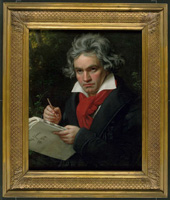 Ludwig van Beethoven was born in Germany on the 15th or 16th December 1770, and died in Vienna, Austria, on the 26th March, 1827. His father was his first teacher and he started studying piano with Tobias Friedrich Pfeiffer. He took musical theory and keyboard techniques with Gilles van Eeden; violin and viola with Franz Rovantint.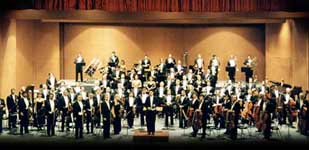
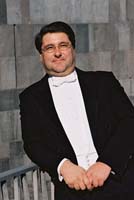 "… Visible for anyone, this interesting Austrian conductor shows a precise and clear, always secure technique, also in Ravel's complex compositional structures. He illuminates it with light, elegant phrasing which resists any temptation of superficial orchestral coloring and he succeeds in illustrating the incredible modernity of this work...." This is how the "Giornale di Verona" judged Johannes Wildner's performance of Ravel's "Daphnis and Chloë" and herewith only joins into the many opinions who consider Johannes Wildner as one of the best conductors of his generation.
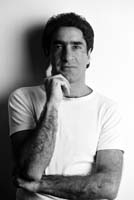 He has been a dancer with the Anajnu Veatem Group (Jewish Dance in Mexico, Danza Judía en Mexico) for 20 years, and resident choreographer and assistant director for this company since 1985, where he has composed a large part of its plays, among them the remarkable Dios no lo sé… and Una Pincelada de Horror y de Coraje (God, I do not know… and A Brush Stroke of Courage and Horror), both presented in the International Cervantes Festival, as in the Ballet Festival in Havana, Cuba. It was selected to participate in the Festival’s Gala at the García Lorca Theater.
 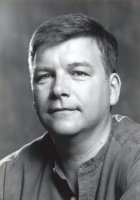 Born in Potsdam, Germany, Michael Baba studied singing at the ‘Hanns Eisler’ Superior School in Berlin, and he gave classes with Heinz Reeh. At present he works with Professor Bernhardt Adler and Mrs. Gandula Hinz.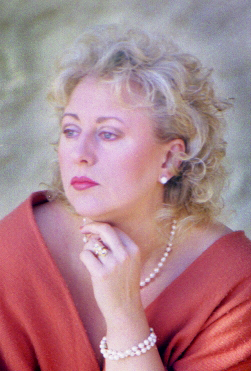
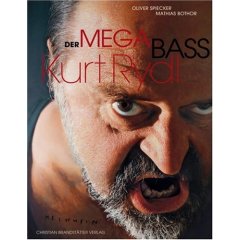 Kurt Rydl is one of the greatest bass singers of our time.
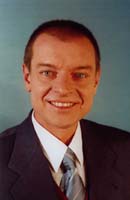 The German bass-baritone, Andreas Scheibner, was singing in various church and school choirs at an early age, also learning the violin. For seven years he was a member of the famous Dresden Kreuzchor under Rudolf Mauersberger. A gramophone recording as a young bass soloist under Hans Werner Henze in 1968 pointed him towards a singing career. He studied at the Hochschule für Musik in Dresden. From 1974 onwards he received Theatre engagements in Bautzen, Stralsund, Potsdam and Dresden, where he became one of the busiest soloists in a very short space of time. He has won prizes at numerous international singing competitions, notably in Leipzig, Toulouse and Montreal.
 She initiated her musical education studying violin and piano for eleven years with her parents. Her training as a singer started under soprano Rosario Andrade.
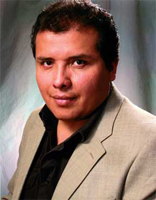 Descendant from a great tradition of Mexican opera singers, such as Francisco Araiza, Guillermo Sarabia, Ramón Vargas or Rolando Villazón, the baritone Guillermo Ruiz starts his musical studies with the Ensemble Soloists (Solistas Ensemble) choral group, part of the Instituto Nacional de Bellas Artes (INBA) in Mexico City. His technical and vocal learning have befallen under Ricardo Suárez and Mario Hernández. He has taken master classes from outstanding singing personalities, such as Ramón Vargas, Joan Claviter, Lucy Arner, Carmo Barbosa, Pedro Lavirgen, Marco Balderi, Edelmiro Arnaltes and Suso Mariátegui.
 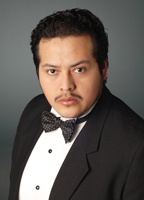 Joel Montero was born in Mexico and already took professional music and violin lessons as a child. He began to study conducting until his vocal talent was discovered and he retrained as a singer. In 1999 the young tenor came to the Salzburg Mozarteum to continue his studies with Heiner Hopfner.
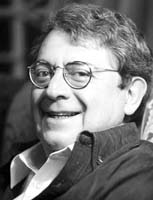 His work as a writer includes well known narrative, poems and essays. As a poet and literary translator he has specialized in classic Greek and Latin poetry and several Latin American and European poetry from the Twentieth century currents. Some of his outstanding translations have been Safo and Carmina Burana.
 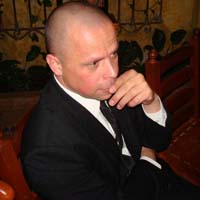 Bernhard Rehn was born in Austria (1968) and studied architecture and urbanism in Graz (Austria), Stuttgart (Alemania) and Mérida (Mexico).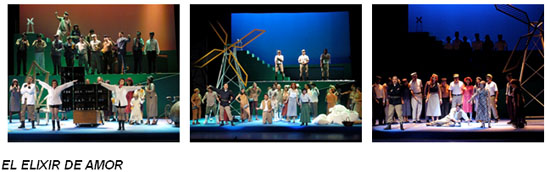
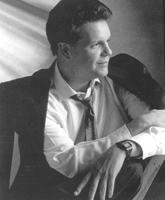 Gerardo Rábago has been a Choir Director since 1986, and made his professional debut in 1990 with the Orquesta Sinfónica del Estado de México (State of Mexico Symphonic Orchestra) and its Director Enrique Bátiz, presenting Beethoven’s Ninth Symphony, Bizet’s Carmen; Handel’s The Messiah and Christmas Eve by Rimsky-Korsakov.
 He has a Degree in Social Communication and, has performed an intense labor broadcasting opera in the media since 1984. He has collaborated with Opus 94, Radio Educación, XELA and Radio UNAM, for which he conducted live the OFUNAM Concerts from Sala Nezahualcóyotl, from 1985 to 1991. He was executive producer of XHIMER Opus 94, and presented several operas and vocal music series.